


2026 Nissan Sentra vs 2026 Honda Civic: Which Sedan Offers More Everyday Value?
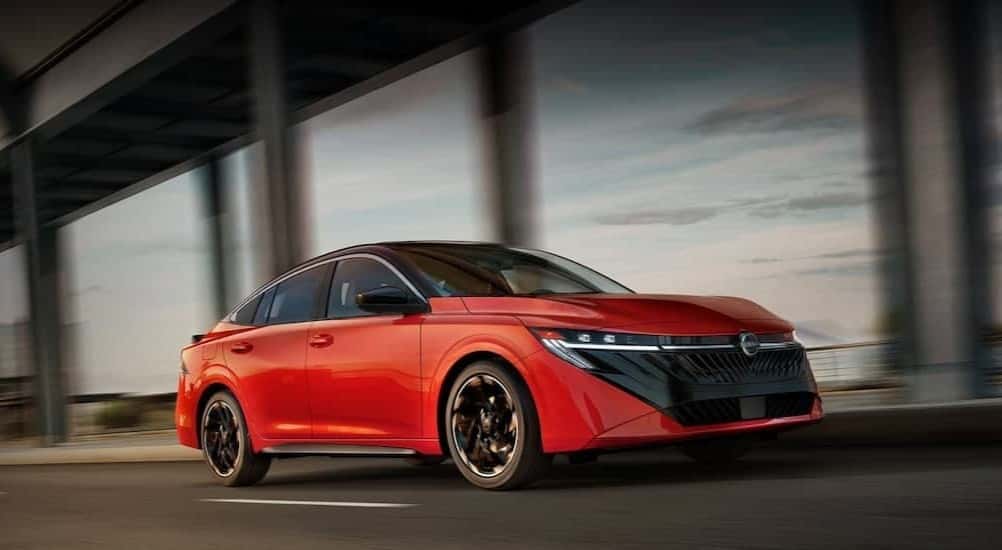
The Honda Civic is a familiar reference point for compact-car shoppers, but its reputation shouldn’t make the decision automatic. Drivers still need to compare what each sedan provides and which advantages matter during an ordinary week.
The 2026 Nissan Sentra vs 2026 Honda Civic comparison presents two distinct approaches. The Civic delivers stronger fuel economy, generous rear-seat space, and available hybrid performance. The Sentra counters with a lower starting MSRP, greater gas engine torque, more front legroom, and a suite of standard technologies that Honda reserves for higher Civic configurations.
For budget-conscious commuters, the Sentra offers the essentials—and several desirable extras—without requiring them to purchase more car than they need.
Start With the Standard Fare
Affordability involves more than finding the lower number on a window sticker. It also depends on how far a shopper must move up the lineup to obtain useful conveniences.
The Sentra avoids much of that upward climb. Its entry-level S configuration has a lower starting MSRP than the Civic LX while including equipment such as:
- A 12.3-inch infotainment touchscreen
- Wireless Apple CarPlay and Android Auto
- Blind-Spot Warning
- Rear Cross Traffic Alert
- A 60/40-split folding rear seat
The Civic LX includes many important fundamentals, but it starts with a seven-inch touchscreen and wired smartphone integration. It also lacks Honda’s comparable blind-spot and rear cross-traffic systems. Its rear seatback folds as one piece rather than splitting into two independently folding sections.
Honda offers upgrades in these areas farther up the Civic lineup. Nissan’s advantage is that drivers can get them without stepping up beyond the least expensive Sentra. The result is a lower entry point paired with generous standard equipment.
Everyday Power Favors the Sentra’s Torque
The base versions of these sedans are designed for commuting, errands, and practical transportation rather than high-performance driving. Their horsepower ratings are nearly identical, but their torque output reveals a meaningful difference.
The gas Civic produces 150 hp and 133 lb-ft of torque. The Sentra delivers 149 hp and 146 lb-ft of torque. Honda’s one-horsepower edge is hardly exciting and is, in fact, negligible for most daily situations, while Nissan provides 13 additional lb-ft of torque—a roughly 10% increase over the non-hybrid Civic.
Torque contributes to the response drivers feel when leaving a traffic light, joining a highway, or adjusting their pace. It doesn’t automatically make the Sentra quicker, since weight and transmission behavior also affect acceleration.
The specifications instead show that the Sentra develops more rotational force while sacrificing almost nothing in horsepower—a useful balance for ordinary roads and familiar speeds.
A test drive remains essential because steering, ride quality, and transmission simply can’t be reduced to output figures. While we must admit that a world where test drives weren’t an essential part of a successful shopping experience would be faster and perhaps more streamlined, taking the time to test a vehicle makes a night-and-day difference in ensuring your final decision is one that you’re truly confident in.
A Larger Screen Right From the Top
We no longer live in the ‘Digital age.’ No, we live in the ‘Advanced Digital Age.’ And, as part of this Advanced Digital Age, is infotainment. Drivers use infotainment to select music, follow directions, take calls, and play podcasts throughout the week. There’s a reason it’s called infotainment—information and entertainment intertwine the same way education and entertainment co-mingled in what we know as ‘edutainment.’
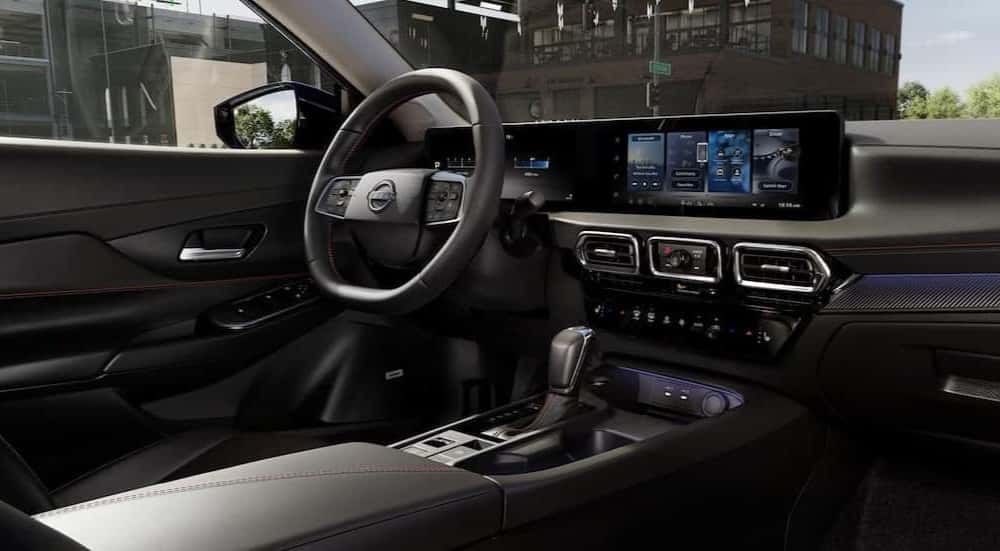
The Sentra S places those functions on a 12.3-inch touchscreen. The Civic LX uses a seven-inch display. Nissan therefore provides substantially more screen area without asking the shopper to select a higher configuration.
A larger display gives menus, maps, and compatible phone applications more room, making information easier to view at a glance.
Leave the Cable at Home
Both sedans support Apple CarPlay and Android Auto, but let’s be honest: not having these features would be a red flag. However, the Sentra includes wireless versions of both systems, while the Civic LX requires a wired connection.
With a compatible device, Sentra drivers can connect without removing the phone from a pocket or bag. Short trips require less preparation, and the console remains free of another cable.
The Civic offers a larger display and wireless integration farther up its range. The Sentra makes both accessible without requiring budget-focused shoppers to select a higher configuration.
Added Awareness in Common Situations
Both sedans offer driver-assistance technologies, including emergency braking, lane support, traffic-sign recognition, automatic high beams, and rear visibility.
Entry-level packaging creates the difference. The Sentra S includes Blind-Spot Warning and Rear Cross Traffic Alert, whereas the Civic LX doesn’t include Honda’s comparable systems.
Blind-spot warning can alert a driver when another vehicle is detected in an adjacent area that may be difficult to see. Rear cross-traffic alert watches for approaching traffic while the Sentra is reversing. That assistance can be particularly useful when backing out between two larger vehicles in a crowded parking lot.
These systems don’t replace attentive driving, but they add useful information. Receiving both at the Sentra’s starting level strengthens its commuter credentials.
Cabin Space Depends on Where You Sit
The Sentra prioritizes space for the front seats, while the Civic offers advantages in the back seat and cargo area.
Front legroom measures 44 inches in the Sentra and 42.3 inches in the Civic. Nissan’s 1.7-inch advantage may appeal to taller drivers or commuters who spend considerable time behind the wheel.
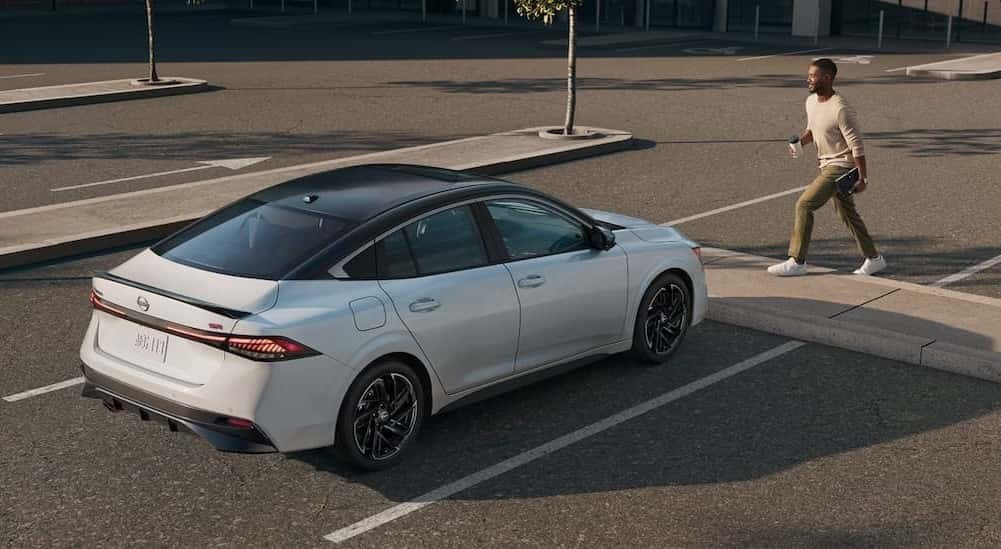
The picture reverses in the second row. The Civic supplies 37.4 inches of rear legroom, compared with 34.8 inches in the Sentra. Honda also provides slightly more trunk capacity, but we’re talking mere fractions, with the Civic boasting 14.8 cu.ft. while the Sentra has 14.3 cu.ft, which is still more than the 14.1 cu.ft. the Honda Civic Si has. Despite these differences, the experience of sitting in the rear row of the Sentra or placing cargo in its trunk doesn’t feel discernibly tighter or smaller than what you get in the Civic. What you will notice, however, is how much lighter your wallet will feel after you’ve purchased Honda’s compact sedan over Nissan’s.
Flexibility Beyond the Measurements
The Sentra regains an advantage when cargo and passengers must share the car. Its standard 60/40-split rear seat lets a driver fold one portion for a longer object while preserving another seating position.
The Civic LX uses a one-piece folding seatback. It can still expand the cargo area, but doing so removes the entire rear seat from passenger duty. Honda introduces a 60/40 split in higher Civic configurations.
That flexibility may matter when transporting recreational gear, a boxed purchase, or another long item. It’s another practical feature included from the beginning.
The Civic Doesn’t Leave Empty-Handed
Fuel economy is one area where the Civic holds the stronger hand. Its standard gas powertrain earns higher EPA estimates than the Sentra, making it attractive to drivers who accumulate substantial annual mileage.
Honda also offers Civic hybrid models with considerably greater efficiency and 200 total system horsepower. The Sentra doesn’t provide a comparable hybrid powertrain, unfortunately, but the Sentra remains an efficient compact sedan even without the option. Between the initial price, financing, insurance, maintenance, and feature packaging all contributing to affordability, fuel is merely one ownership expense, so having excellent fuel efficiency is the icing on the cake, if that cake is a sedan as cost-effective as the Sentra.
Why the Sentra Makes the Stronger Value Argument
The Civic’s efficiency, rear-seat room, cargo capacity, and hybrid performance may decide the comparison for high-mileage drivers or households that frequently carry rear passengers.
The Sentra speaks more directly to someone seeking an attainable, comfortable, and well-equipped daily driver. It begins at a lower MSRP, delivers 13 lb-ft more gas-engine torque, and offers 1.7 inches of additional front legroom. A 12.3-inch touchscreen, wireless smartphone integration, blind-spot warning, rear cross-traffic alert, and a split-folding rear seat all come standard.
Those advantages influence what the shopper must spend, how the engine responds, how easily a phone connects, and what assistance is available in traffic.
The Civic remains a familiar benchmark, but the Sentra is better suited for shoppers who want comfort and modern technology without paying for upgrades their routine doesn’t require. And if you made it this far into our discussion, then this may sound familiar. The Sentra deserves your undivided attention because it delivers the experience you want at the price you desire.

0 comment(s) so far on 2026 Nissan Sentra vs 2026 Honda Civic: Which Sedan Offers More Everyday Value?