


Head-to-Head: 2025 Nissan Sentra vs 2025 Honda Civic Sedan
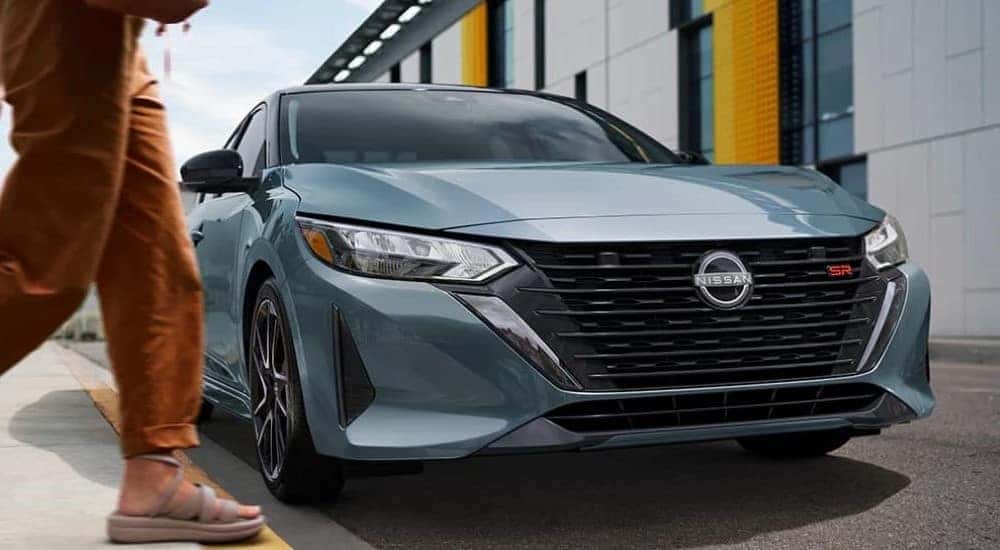
In a world of constantly escalating prices, the Nissan Sentra is hard to ignore. Starting at an affordable $21,590, the 2025 Nissan Sentra is the perfect investment for any driver seeking a reliable, efficient compact sedan.[a] Routinely cited as one of the best values in its segment, the stylish Sentra proves that affordability and class are not mutually exclusive. The Nissan might not offer the high-speed thrills of some of the segment’s more performance-focused models, but for those on the hunt for a dependable daily driver, it’s well worth a quick test drive.
The 2025 model encapsulates everything there is to love about the Sentra but faces some stiff competition from some of the segment’s perennial favorites. While the Honda Civic has made quite a name for itself over the last five decades, it fails to outpace the Sentra in those areas that drivers tend to value the most. How do the most recent compact offerings from Nissan and Honda stack up in terms of performance safety, efficiency, capacity, and tech? We’ll work our way through the checklist as we compare the 2025 Nissan Sentra vs 2025 Honda Civic Sedan.
Performance
Despite the difference in price, the Nissan Sentra and Honda Civic are actually remarkably similar under the hood. Both compact sedans are powered by a 2.0L four-cylinder engine, and while the Civic does technically pack more of a punch, it’s little more than a rounding error. The 2025 Sentra provides drivers with 149 hp compared to 150 ponies in the Civic, which is a much smaller margin than one might expect given the almost $3,000 difference in starting price. The same goes for the transmission and drivetrain. Both the Sentra and Civic are designed with front-wheel drive and a continuously variable automatic transmission (CVT) that maximizes efficiency while providing a smooth, seamless ride free of the abrupt gear changes one might find in a traditional automatic.
While the Civic can certainly compete with the Sentra from a performance perspective, the sedan isn’t what it once was. Honda has made some drastic changes to the popular compact in recent years, dropping the optional manual transmission and shaving some vital power from the four-cylinder engine. While the 2024 Civic offered 158 hp, Honda watered down the Civic for 2025. It’s not that much of a difference, but it’s a hard sell when you consider the fact that the sedan is both less powerful and more expensive than the previous model year. The Sentra hasn’t faced the same fluctuations, with the 2025 model remaining identical to the 2024 version in terms of performance.
Fuel Economy
Efficiency is everything in the compact sedan segment. While SUV or pickup drivers might be comfortable sacrificing a few miles per gallon in the name of improved towing performance or all-wheel drive capability, fuel economy is a top priority for those choosing between compacts. So, how do the Nissan Sentra and Honda Civic compare when it comes to efficiency? Again, it’s almost too close to call. The 2025 Sentra offers an EPA-estimated 30 MPG in the city and 40 MPG on the highway for the S and SV trims, or 30 MPG in the city and 38 MPG on the highway for the range-topping SR and SR Midnight Edition. The Sentra might not lead the compact class in fuel economy, but it’s not that far off, and the gap can easily be closed by simply embracing some good driving habits. As far as the 2025 Civic is concerned, drivers can expect 31 MPG in the city and 39 MPG on the highway in its Sport trim. Again, not the highest numbers in the segment, but not too far off the pace. Those seeking to really minimize their visits to the gas station can opt for the Civic Hybrid, but with a starting price that’s almost $7,500 more than the Sentra, it’ll take a while to recoup the fuel-related savings.
Safety
The Nissan Sentra and Honda Civic both offer a well-rounded suite of advanced safety tech that can give drivers an increased sense of security when they’re behind the wheel. The Sentra provides an impressive showcase of some of today’s best advanced driver assistance systems (ADAS), from Blind Spot Warning and Rear Cross-Traffic Alert to Rear Automatic Braking and Automatic Emergency Braking with Pedestrian Detection. These safety-enhancing ADAS are all included as part of the sedan’s standard features, which is a refreshing change of pace in an industry where such features often come at a premium. If you want to make your next drive even easier with some additional ADAS, Nissan has you covered with a long list of available tools.
The Sentra’s adaptive cruise control allows drivers to sit back, relax, and enjoy the ride as it automatically adjusts the throttle and brakes in response to changing traffic conditions. The thrifty sedan can also be had with an Intelligent Around View Monitor that provides a live feed of the area immediately surrounding the car. The compact Sentra is already pretty easy to park thanks to its modest size, but the Intelligent Around View Monitor will certainly come in handy next time you’re trying to squeeze into a tight spot or spot any oncoming traffic as you merge onto the road.
The Honda Civic offers a very similar safety package that includes a Collision Mitigation Braking System, Lane Departure Warning, and a Lane Keeping Assist System. Adaptive cruise control does come standard, but the Civic lacks some important standard features like the Sentra’s Blind Spot Warning and parking sensors. Again, it’s hard to separate these two models, but the Nissan offers a clear advantage when you factor in the compact’s low starting price.
Interior
Who says a stylish vehicle needs to break the bank? With the 2025 Sentra, Nissan has managed to craft a polished interior that wouldn’t be out of place in a vehicle with a much higher starting price. The centerpiece of the cabin would have to be Nisan’s Zero Gravity seats, which offer a sumptuous design that leverages cutting-edge technology to provide a supportive, comfortable seating experience when you’re behind the wheel. Nissan used advanced ergonomic engineering to craft seating that offers the ideal neutral posture. This design can go a long way towards alleviating driver fatigue over long road trips, making for a more enjoyable experience that’ll leave you feeling spry and refreshed no matter how many miles you might be logging.
The Sentra also offers a convenient dual-zone automatic climate control system, an optional sunroof, and perhaps most importantly, plenty of room. The Civic does notch a few style points for its sporty honeycomb-patterned dashboard and offers plenty of clever storage options for squirreling away your accessories, but it doesn’t offer a sunroof or automatic climate control unless you opt for a hybrid model and otherwise fails to differentiate itself from the Sentra in any major way.
Technology
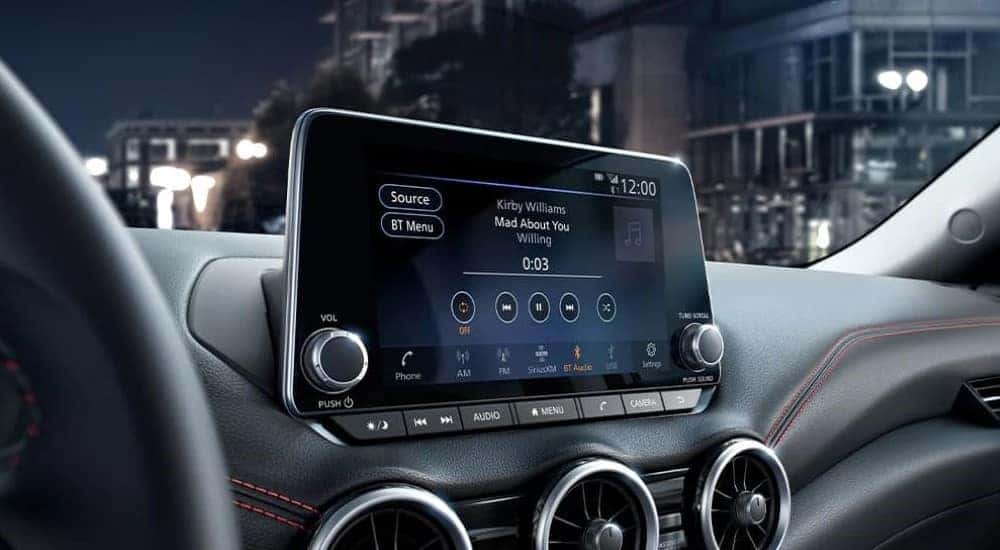
In-vehicle technology is never treated as an afterthought in today’s auto industry. While features like touchscreen infotainment systems, Wi-Fi hotspots, and other connectivity options were once considered a luxury, drivers have come to expect a little more from the modern car. The Sentra defies its bargain price with a generous assortment of tech features that give the cabin a modern, refined look. The sedan’s standard seven-inch touchscreen serves as the command center for all your audio/visual and connectivity needs and comes standard with Apple CarPlay and Android Auto. Those looking for a little extra screen real estate can opt for the eight-inch display on the SV and SR trims, as well as extra USB ports throughout the cabin.
Once again, the Civic and Sentra are hard to separate on the basis of interior tech. Honda’s compact comes with the same standard seven-inch infotainment display as the Sentra. The Civic’s smartphone connectivity options also mirror those of the Sentra, with Apple CarPlay and Android Auto both offered as standard features. Both cars offer a Wi-Fi hotspot that’ll allow passengers to easily stream their favorite content when they’re on the road, as well as plenty of charging ports that’ll keep your devices juiced up and ready to go. Premium Bose stereo systems can be added to each model, although the Sentra makes this an option on all but the base trim, while you can only get a Bose sound system on the top Civic Hybrid trim.
Verdict
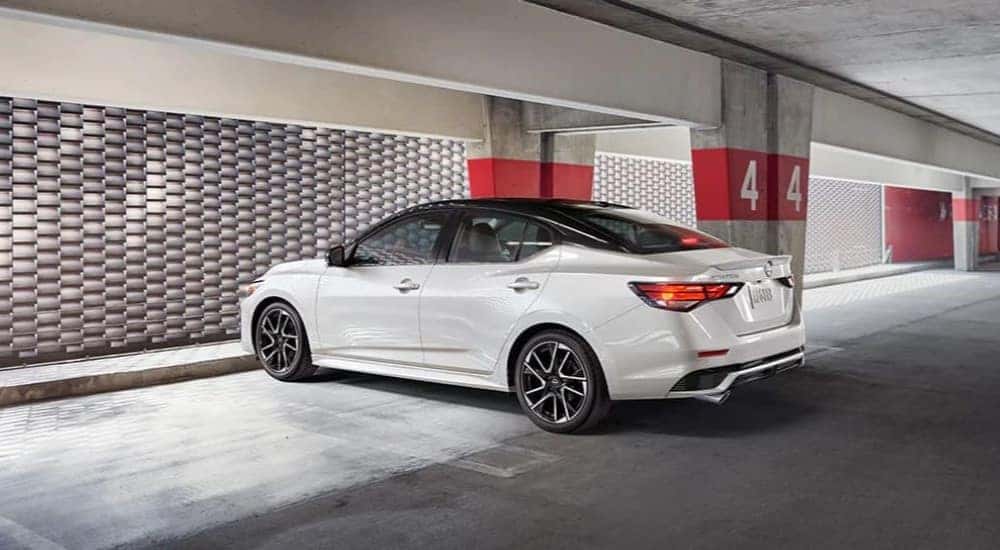
If you’re in the market for a stylish compact that’s packed with a generous assortment of modern tech and safety features, the 2025 Nissan Sentra makes a pretty good case for itself. The car’s efficient 2.0L engine, impressive fuel economy, and plush interior make the Sentra the perfect addition to any garage, but its most convincing selling point would have to be its price. The cost difference between two models in the same segment is usually pretty negligible, but that’s certainly not the case when you compare the 2025 Nissan Sentra and Honda Civic.
The Sentra’s range-topping SR trim starts at $24,590, which is just slightly higher than the $24,250 starting price for the Civic’s cheapest LX model.[a] The difference is even more noticeable as you start to climb the trim ladder, with the Sport Touring version of the Civic ringing in at an incredible $31,950. If there was a stark difference in terms of performance, features, or convenience, the Civic might be able to make a stronger case for itself, but ultimately, it’s a little difficult to justify the price difference when the Sentra offers such a similar experience in a much more wallet-friendly package.

0 comment(s) so far on Head-to-Head: 2025 Nissan Sentra vs 2025 Honda Civic Sedan