


Nissan Sentra vs Mazda3: Which Is the Better Commuter Car?
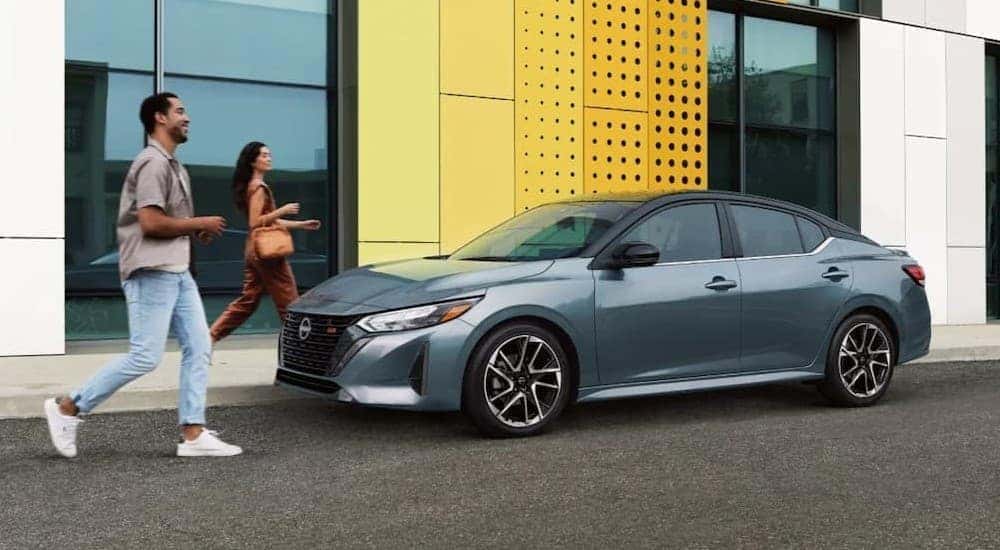
If you commute to work, then a compact sedan is a great choice for a car. Sleek and efficient, but not as cramped as a subcompact model, this body style is great for logging a lot of miles without spending an arm and a leg on fuel. While some automakers have dropped sedans from their lineup entirely in favor of trucks and SUVs, there are still plenty of options out there for smart drivers who don’t want to pay for something bulkier than they actually need.
Today, we’re going to pit the 2025 Nissan Sentra vs 2025 Mazda3. For a commuter, which of these cars is the better choice? The Mazda3 has an upscale look, but can it compete with the practical Sentra when it comes to substance? Let’s dig into the details and find out.
Fuel Economy
Efficiency is a top priority for most commuters, especially those who need to drive a long way to get to and from work. If you have an inefficient engine, you’re losing money with every mile, and that can add up over time. According to the EPA, the average vehicle gets 28 MPG, so a good commuter vehicle will have a higher MPG rating that lets you pass by the gas station and get home to enjoy your free time ASAP.
The 2025 Nissan Sentra gets 30 MPG in the city, already surpassing the average figure. Plus, you’ll be getting a whopping 40 MPG on the highway, resulting in an overall EPA rating of 34 MPG combined. With a full tank, you’ll have 422 miles of range, so no matter how long your commute is, you won’t have to stress about running out of fuel at a bad moment.
In its most efficient configuration, the 2025 Mazda3 can come close to the Sentra, but can’t quite catch it. This model gets 27 MPG in the city and 37 MPG on the highway, for a total of 31 MPG combined. Mazda likes to tout the fact that the Mazda3 offers all-wheel drive, but opting for that brings the figures down even more, so you only get 26 MPG in the city and 35 MPG on the highway. With the optional turbocharged engine, the rating dips below the industry average to just 27 MPG combined.
It may seem like the Mazda3 has more options, but that’s only true if you’re willing to disregard fuel economy. Even if you choose the most efficient option, the Mazda3 still can’t meet the efficiency of the Nissan Sentra.
Safety Features
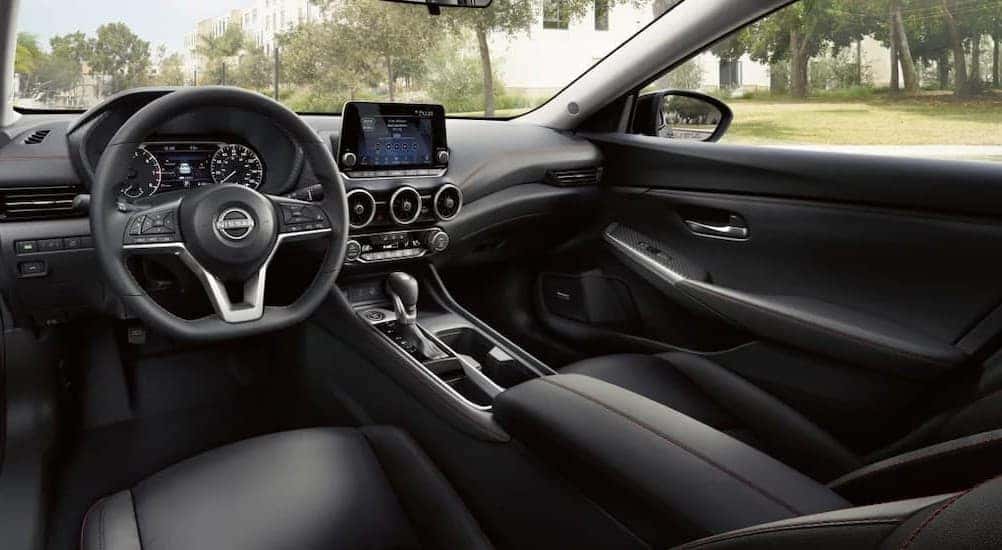
Driving early in the morning or after a long day’s work can be tiring, and a little extra help keeping track of and reacting to your surroundings can help you stay safe on the road. Both the Sentra and the Mazda3 have five-star overall safety ratings from the National Highway Traffic Safety Administration, so both provide a solid level of security so you can drive with confidence. They also both come standard with driver assist features like automatic emergency braking, lane departure warning, and blind spot monitoring. But they don’t have identical lineups of safety features.
Two features that come standard in the Sentra but aren’t available on the Mazda3 are rear parking sensors and rear automatic braking. These can both come in handy when backing out of a parking spot, especially if you’re in a crowded parking garage while everyone is leaving work for the day, eager to get home and not necessarily paying full attention to other vehicles.
Not all safety features are reactive; some can be preventative. For example, let’s look at tire pressure. Having low tire pressure can mean a blowout is imminent, so it’s important to get a warning ahead of time. Both of these vehicles have a tire pressure monitoring system, but the Sentra goes further by making it easy to avoid getting this warning in the first place. Its tire fill assistant lets you know when you’ve put just enough air in your tire, taking the guesswork out of the equation so you never over- or under-fill.
Passenger & Cargo Space
Just because you’re choosing a compact car doesn’t mean you don’t care about having enough space for you and any passengers and cargo you might be bringing along for the ride. After all, a commuter car should also be able to handle errand runs on the weekends, and if you carpool, then you want to be able to offer a comfortable space to your coworkers. So which of these cars has the space you need?
The two models offer pretty similar dimensions from the outside: the Sentra is a bit shorter and wider, but the difference is by less than an inch in each case. But inside, the two use their available space differently. The Sentra gives you and your front passenger an inch and a half more legroom, so you can stretch out and get comfortable no matter your height. While the Mazda3 technically provides more rear legroom, the difference is much less dramatic at only a fifth of an inch.
If you need to load cargo into the trunk, you’ll have an easier time in the Sentra thanks to over a cubic foot more space. Both the Sentra and the Mazda3 allow you to expand this cargo space by folding down some or all of the rear bench seat—a 60/40 split gives you multiple options. Of course, you’ll need to use this feature less often with the Sentra, since you’re starting with a larger trunk that can accommodate more cargo.
Value
Once you’ve finished your commute and arrived at work, you’re working hard for your paycheck. You deserve to keep as much of it as you can and spend it on your family, your hobbies, and the other things that make your life worthwhile. There’s no need to waste it by paying extra for a car that has a more upscale look, but doesn’t necessarily offer a better driving experience.
As we’ve learned, the Sentra equals or exceeds the Mazda3 in many important categories, from safety to efficiency to cargo space. You might expect to pay more for these advantages, but the Nissan is actually the more affordable option. The base Sentra S has a starting MSRP of $21,590, while the Mazda3 2.5 S starts at $24,150.[a] Upgrade to the Sentra SV, which has more standard tech, and you’ll still have a lower MSRP than the base Mazda3, at $22,290.[a]
With that price difference, opting for the Sentra gives you two options. Either you can stick with the base trim and keep more money in your pocket, or you can upgrade to a higher trim level with more features, getting more bang for your buck. Add the fuel economy savings on top of the lower sticker price, and you’ll really start to understand the kind of immense value that the Sentra offers.
The Nissan Sentra Has Everything Commuters Need
The Mazda3 may have flash, but the Sentra has the substance you need as a commuter. With its efficient engine, spacious interior, comprehensive suite of safety features, and incredible value, the Sentra is the smart choice for just about anyone who drives to and from work. If you’re interested in getting behind the wheel of this car, visit us here at Illini Nissan. We’ll be happy to show you the lineup of trim levels and set you up with a test drive, so you can be confident this is the right car for you.

0 comment(s) so far on Nissan Sentra vs Mazda3: Which Is the Better Commuter Car?