

The New Leader Takes on the Old Standby: The 2026 Nissan Rogue vs 2026 Ford Escape
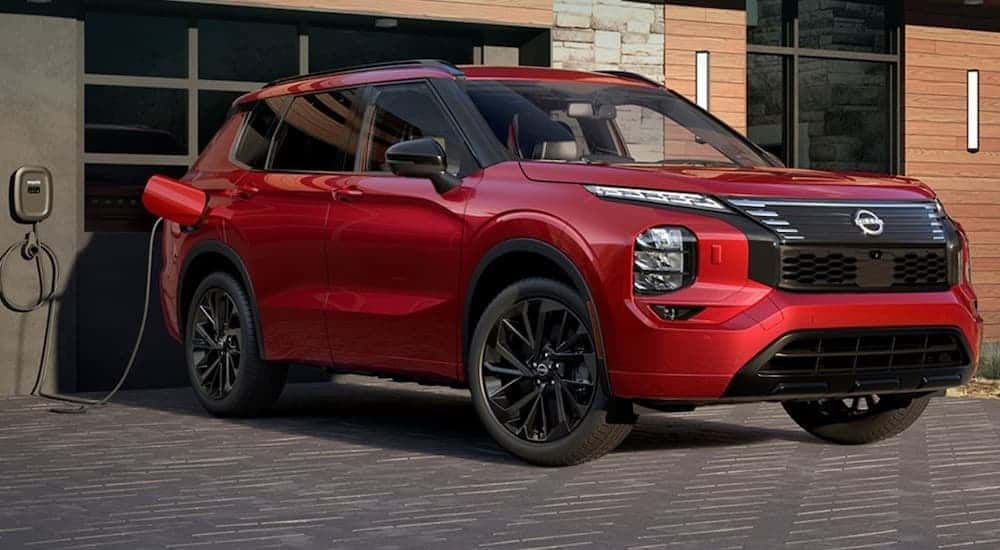
The Nissan Rogue has been one of the market’s most enticing crossover models since its debut in 2008, and it’s only getting better with age. The current third-generation model showcases the crossover’s broad appeal, offering a satisfying blend of comfort, versatility, and cargo space that makes it one of the market’s most well-rounded options. An award-winning engine delivers both strong performance and impressive fuel economy, not to mention low projected ownership costs and a responsive driving experience that’ll have you looking forward to every journey. Simply put, the Rogue is a crossover without compromise.
How does it fare against one of the segment’s longtime leaders? The Ford Escape is nearing the end of its run as Ford focuses on new EV models, but takes one last lap for the 2026 model year. Let’s see how the two models compare in the areas budget-minded buyers value most as we pit the 2026 Nissan Rogue vs 2026 Ford Escape.
Performance and Efficiency
There are many ways to compare two crossover models, but few carry as much weight as the goods you’ll find under the hood. The Rogue’s base engine is also its only engine. This might be a dealbreaker, except that Nissan has gone above and beyond to equip its compact crossover with one of the most well-rounded powertrains in the segment.
No matter which trim you choose, you’ll be treated to an award-winning 1.5L turbocharged I-3 engine that offers an enticing combination of performance and fuel economy. Named one of Ward’s 10 Best Engine and Propulsion Systems in 2022, the VC-Turbo engine is rated for 201 hp and 225 lb-ft of torque. That places the base engine firmly towards the top of its class as one of the few compact crossovers to surpass the 200-hp mark with its standard engine. This impressive output provides the Nissan with plenty of passing power on the highway.
However, it’s this engine’s efficiency that really has drivers talking. According to EPA estimates, the 2026 Rogue is rated at 28 MPG in the city and 35 MPG on the highway in AWD form, and up to 29 MPG in the city and 36 MPG on the highway with the FWD version. That gives the FWD Rogue a rating of 32 MPG combined, which actually leads the segment when discounting hybrid models. If you are looking for an even more eco-conscious option, a little patience is sure to pay off, with Nissan set to debut a new hybrid-powered Rogue for the 2027 model year.
The Ford Escape outpaces the Rogue in terms of sheer selection, but when it comes to the base engine, Nissan holds a clear edge. The Escape can be had with four different engines, including both hybrid and plug-in hybrid (PHEV) options, but the entry-level design is destined to disappoint. Producing just 180 hp and 199 lb-ft of torque, the Escape is noticeably lacking in pep. This might be excusable if the SUV were built around a noticeably smaller engine, but the hard truth is that the Escape is powered by a 1.5L turbocharged I-3 that’s almost identical to the Rogue’s. Ford has also saddled this engine with a traditional eight-speed automatic transmission that’s just no match for the Rogue’s impressive continuously variable transmission (CVT). The disadvantages of the eight-speed automatic will become clear as soon as you pull up to the pump, with the Escape logging just 30 MPG combined, or as low as 28 MPG in the AWD model.

Cargo and Comfort
While it might technically be classified as a compact model, the 2026 Nissan Rogue offers storage potential that few of its competitors can match. In fact, the Rogue places right towards the top of its class with 74.1 cu.ft. of maximum cargo capacity. That sort of space is bound to make all the difference when you’re trying to get through a busy week, pack for a long road trip to accommodate all the baggage that comes with family life. The Escape fails to meet the high bar set by its Nissan rival, offering buyers just 65.4 cu.ft. of storage and as little as 60.8 cu.ft. when choosing the hybrid.
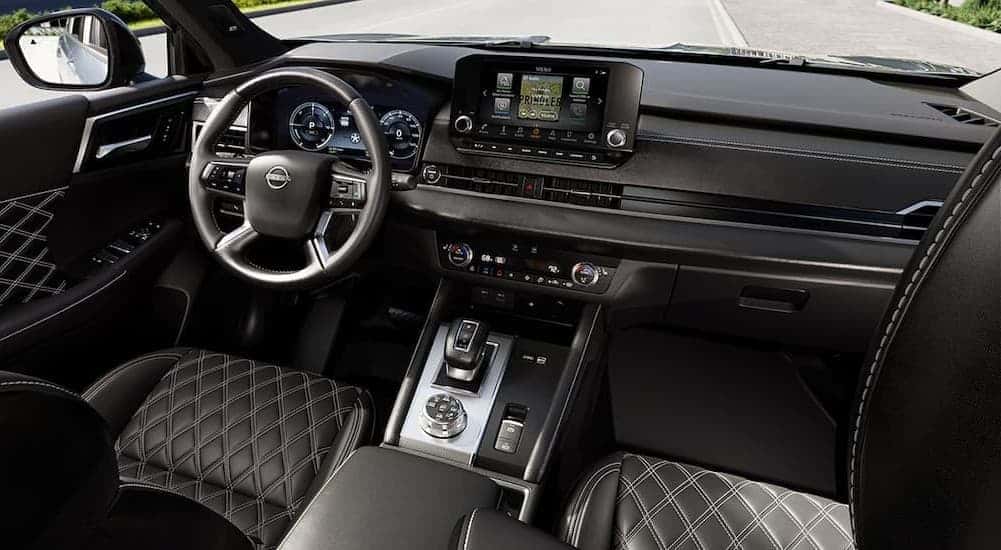
The Rogue also boasts two unique features that go a long way toward improving the SUV’s comfort and cargo-carrying capabilities. First, you have Nissan’s NASA-inspired Zero Gravity seats. While the compact crossover is quite ready for liftoff, buyers will enjoy a little space-age technology every time they step behind the wheel. These Zero Gravity seats are designed to reduce pressure on the legs, hips, and back, align the spine, and allow drivers to cruise down the road in a natural, relaxed position. This neutral posture offers several benefits, including reduced fatigue and muscle strain, relaxed shoulders and neck, and improved blood flow to the lower body.
Then there’s the Rogue’s exclusive Divide-And-Hide cargo system. The SUV’s storage capacity is already the stuff of legend, but the Divide-And-Hide lets you make the most of every square inch with a customizable approach that offers 18 unique configurations. The system uses a set of removable panels, dividers, and hidden compartments that can be used to secure items of all different shapes and sizes. Whether you need a long, flat cargo area to accommodate a new appliance, a hidden area to protect valuables from prying eyes, or separate compartments that’ll keep your watermelon or water jug from crushing bread, chips, and other delicate groceries, the Divide-And-Hide system is here to help.
While the Escape offers some cargo-area customization potential with its sliding second-row seats, 60/40 split-folding rear seats, and fold-flat floor, the SUV lacks many of the features that make the Rogue a standout in the segment. Ford does add a few comfort-enhancing features like heated, power-adjustable seats and memory settings on the upper trims, but it’s too little, too late for the Escape.
Repair Costs and Longevity
Buyers are usually preoccupied with performance, interior tech, and safety systems when shopping for a new vehicle. However, if you really want to ensure you’re getting a good deal, you should also take a moment to consider the long-term costs associated with a specific model. The Rogue’s efficient turbocharged engine doesn’t just make it affordable to operate. The SUV also trends well below average in terms of average annual repair costs. According to RepairPal, drivers will spend just $467 on repairs, compared to the segment average of $521. The Escape doesn’t fare nearly as well, eclipsing the average with an annual repair bill of $600 according to RepairPal. While the Rogue has a clear advantage in terms of average repair costs, there’s another factor drivers need to keep in mind when it comes to the long-term reliability of both models.
The Rogue is easily Nissan’s most popular model, and actually outsells all of the automaker’s sedans and coupes combined. This level of popularity speaks to the Rogue’s compelling blend of comfort, style, and interior space, and it also suggests the Rogue is unlikely to leave the lineup anytime soon. The same can’t be said for the Escape, which will bring its 25-year run to a close at the end of this model year. While it was once the undisputed leader in the segment, the Escape has seen sliding sales ever since the mid-to-late 2010s. Declining popularity and a new focus on all-electric options spell the end for the Escape.
This also makes the crossover a tougher sell for budget-minded drivers. Mostly, it comes down to maintenance and repair costs. As the Escape ends its production run, it could be harder to find parts, particularly specialized items, OEM components, and unique electronic modules. This could lead to long hours at the salvage yard and higher repair quotes, not to mention a relatively limited resale market.
The Rogue and Escape are also pretty comparable in terms of warranty coverage. The Nissan does have a slight edge with its two-year/24,000-mile complimentary maintenance. It might sound like a relatively minor perk, but keeping your vehicle’s oil and filter changed regularly is one of the easiest ways to ensure long-term performance and reliability.
Go Rogue at Illini Nissan
If the Rogue shows where the compact segment is going, the Escape represents where it’s been. The compact enjoyed a solid run over the last 20-plus years, but despite a long string of upgrades and new hybrid options, the Escape is starting to look a bit outdated when compared to many of its contemporaries. Ford’s compact might have helped to popularize the crossover format, but the Escape now risks irrelevance with its undersized design, thirsty base engine, and run-of-the-mill interior.
In addition to its winning combination of performance, cargo space, and comfort, the Rogue is also one of the best values in the compact segment. The SUV’s low starting price, combined with its well-rounded base trim and reputation for reliability, makes the Rogue tough to ignore for those who expect a healthy return on their automotive investment. If you’re ready to see why the Rogue was named one of Cars.com’s 2026 Best Value New Cars and U.S. News & World Report’s Best Compact SUV for Road Trips, it’s time to meet the team at Illini Nissan. We’re here to walk you through everything there is to love about Nissan’s bestselling SUV and show drivers the many advantages of going Rogue.

0 comment(s) so far on The New Leader Takes on the Old Standby: The 2026 Nissan Rogue vs 2026 Ford Escape