

Why Drivers Choose the 2026 Nissan Rogue Over the 2026 Hyundai Tucson
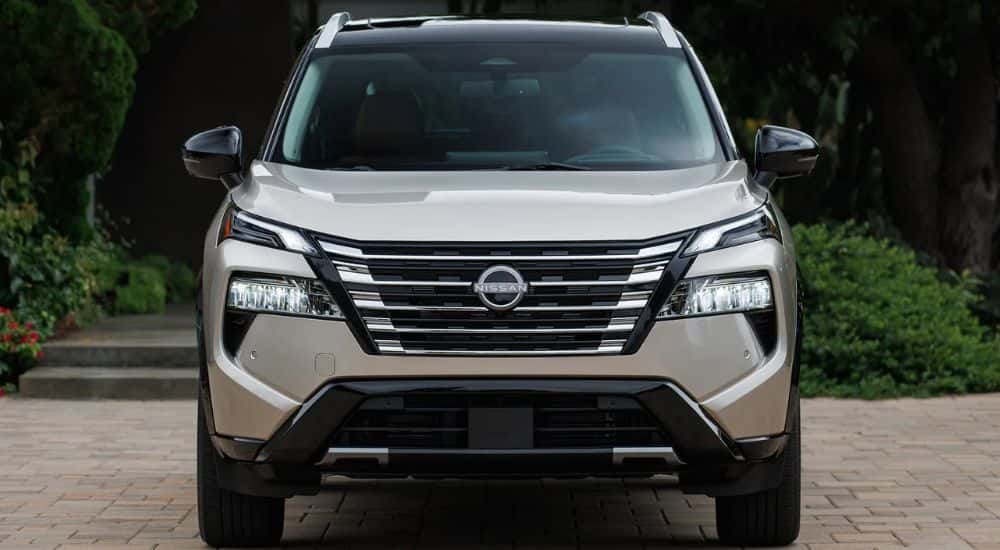
Shopping for a compact SUV can feel a little overwhelming at first, with so many interesting and innovative models on the market today. Both the Nissan Rogue and Hyundai Tucson have been favorites in this class since they first hit the roads in the 2000s.
But when it comes to comparing the 2026 Nissan Rogue vs 2026 Hyundai Tucson, the Rogue emerges as the more capable, confident SUV, and a better overall value for your money. Let’s take a look at how the Rogue exceeds expectations, and the Tucson leaves us wanting more.
Engine Power and Options
Under the hood of every great car is a great engine, and while neither of these compact SUVs qualifies as a racecar, you want to know that you have plenty of reliable power when needed. However, Nissan goes considerably further with its cutting-edge engine technology.
- The 2026 Nissan Rogue is powered by a 1.5L VC-Turbo engine that supplies a very enjoyable 201 horsepower and 225 lb-ft of torque.
- The 2026 Hyundai Tucson features a larger 2.5L inline-four engine, but it musters up just 187 horsepower and 178 lb-ft of torque.
Both of these figures are perfectly fine for most daily driving situations, but when investing in something as important as a vehicle, why settle for what’s adequate when you can have so much more?
Fuel Efficiency Ratings
Fuel economy varies slightly by trim, but on average, 2026 Rogue models equipped with front-wheel drive have an EPA-estimated fuel economy of 32 MPG combined, while all-wheel drive models sacrifice only a little with a fuel economy of 31 MPG combined.
Though the 2026 Tucson has decent highway fuel economy, it struggles in the city. As a result, front-wheel drive models only get an estimated 28 MPG combined, and all-wheel drive models dip to a mere 26 MPG combined.
Available Trims
The 2026 Nissan Rogue and the 2026 Hyundai Tucson are both offered in front-wheel drive and all-wheel drive configurations, but with a different approach.
The Rogue is offered in three front-wheel drive trims: the S, SV, and Dark Armor. There are also five all-wheel drive trims, including the S, SV, Rock Creek, Dark Armor, and Platinum.
Hyundai offers the Tucson in six trims total, each of which comes with standard front-wheel drive and your choice of all-wheel drive. The 2026 Tucson lineup includes the SE, SEL, SEL Plus, XRT, SEL Premium, and Limited trims.
Size and Comfort
The 2026 Nissan Rogue is just 0.3 inches longer than the 2026 Hyundai Tucson, but it uses every millimeter to its advantage. For example, the Tucson has 40.1 inches of front headroom, while the Rogue has a full inch more at 41.1 inches.
In terms of nimbleness, the Rogue is far more comfortable in less-than-perfect driving conditions. With 8.2 inches of ground clearance and a turning circle that’s a full three feet smaller than the Tucson’s, the Rogue makes a great choice in parking lots, parallel parking spots, and tight city streets.
Cargo Space
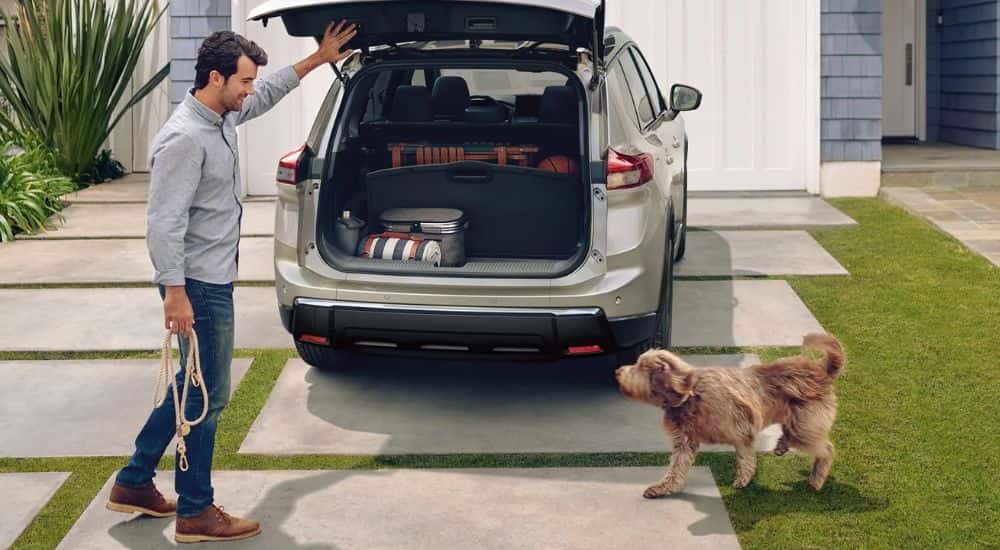
The Tucson has a slightly larger amount of cargo space when all of the seats are filled, with a generous 38.7 cubic feet behind the second row compared to the Rogue’s 36.5 cubic feet. However, with the second row stashed, the playing field is evened, and the Hyundai’s 74.8 cubic feet is virtually identical to the Rogue’s 74.1 cubic feet of cargo space.
Furthermore, only the Rogue offers an available Divide-N-Hide cargo system with six optional configurations to keep your cargo space neatly organized.
Interior for Practical People
The early 2020s saw significant progress in the development of in-car technology, with each manufacturer finding new ways to thrill drivers with amazing features. However, not all of the discoveries made were practical, and many manufacturers are scaling back to creating cabins that are comfortable and convenient without being distracting.
Nissan has made a conscious effort not to overwhelm the cabin with noise and data. Instead, the focus is on providing drivers with the necessary features that help them without taking too much attention off the road.
For instance, both the Rogue and Tucson have heated seats as standard across most trims, along with reclining rear seatbacks, but only the Rogue has Nissan’s standard Zero Gravity seats, giving it an automatic advantage in overall comfort.
Infotainment Technology
In most trims, the 2026 Rogue’s infotainment system is accessed via an eight-inch display, but the Platinum trim includes a larger 12.3-inch display. The NissanConnect technology takes its name seriously, with a Wi-Fi hotspot, standard voice recognition, and Bluetooth phone and audio.
In most trims, the infotainment screen is complemented by a seven-inch information cluster, while the larger 12.3-inch infotainment screen is paired with a matching 12.3-inch digital display.
The 2026 Tucson comes equipped with a standard 12.3-inch infotainment screen, which would be more impressive if the gauge cluster were not relegated to a small 4.2-inch window. On the SEL Premium and Limited trims, however, the gauge cluster can be replaced with a 12.3-inch digital version.
More for the Money
Climbing the trim levels always gives you more features, but the mid-range Nissan Rogue trims give you more for your money.
Off-Road Options
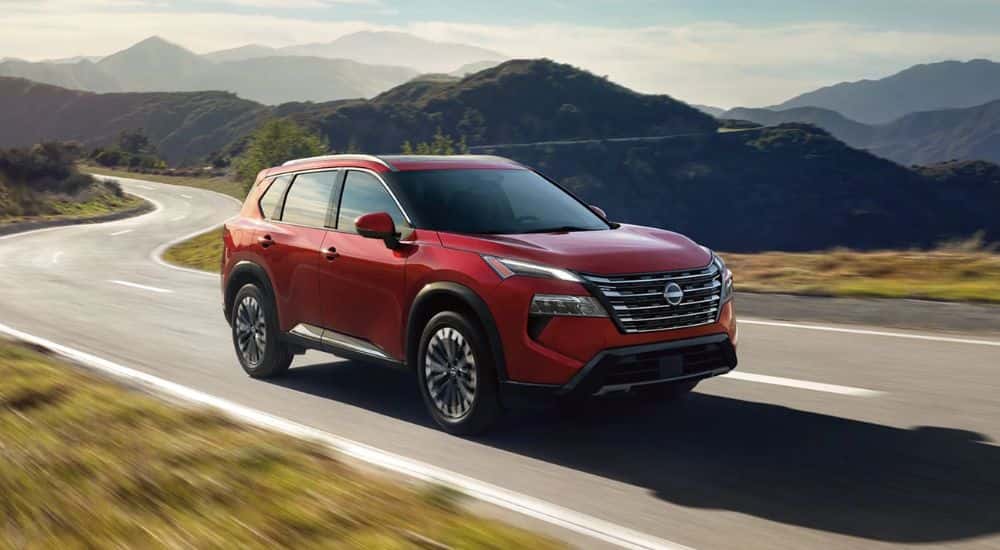
One prime example is the Nissan Rogue Rock Creek, which compares directly to the Hyundai Tucson XRT. Both are billed as adventure-ready vehicles, but only the Rock Creek delivers on that promise, with all-terrain tires, Hill Descent Control, roof rails, exclusive easy-clean leatherette seating, and an Intelligent Around View Monitor with Off-Road View.
The Tucson XRT is priced only slightly less than the Rock Creek, but serves mostly as an appearance package, with exclusive 18-inch wheels, a black fascia, and LED taillights. All-wheel drive isn’t even standard, but when selected, you’ll get an additional Terrain Mode.
Premium Features
It is possible that Hyundai intended the XRT to be a counterpoint not just to the Rock Creek but to the Rogue Dark Armor as well. The Dark Armor trim features a dual-panel panoramic moonroof, 19-inch wheels, and black exterior elements. This trim also includes the Intelligent Around View monitor and stain-resistant Prima-Tex heated seats, though, so it’s not a direct comparison.
Even the top trims show disparity. The 2026 Rogue Platinum dresses the Zero Gravity seats in quilted semi-aniline leather, while the 2026 Tucson has leather-trimmed seating. The Rogue Platinum and Tucson Limited each feature a Bose Premium audio system, but the Nissan Rogue offers Google built-in, while the Hyundai Tucson does not.
Choosing the 2026 Nissan Rogue
The 2026 Nissan Rogue has many admirable competitors in its class, including the 2026 Hyundai Tucson. However, when you compare these models to each other as a lineup, the Nissan Rogue simply makes sense on more levels.
Not only do you get a more powerful engine with better fuel economy, but Nissan also allows drivers the ability to choose a Rogue SUV that makes sense for their needs and budget. Hyundai, on the other hand, provides a stellar assortment of standard features, but neglects to build on the experience in a meaningful way.
And ultimately, don’t we all just want a car that makes sense?

0 comment(s) so far on Why Drivers Choose the 2026 Nissan Rogue Over the 2026 Hyundai Tucson