


Why Drivers Are Choosing the 2026 Nissan Kicks Over the 2026 Hyundai Kona
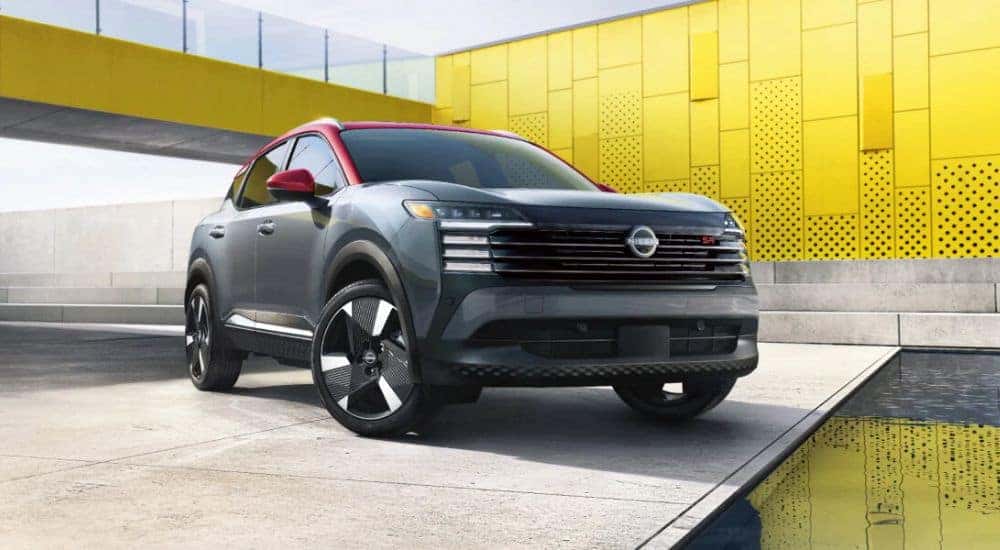
In this day and age, SUVs come in every size and configuration imaginable. On one end of the spectrum are the cavernous three-row SUVs for folks who need a lot of space. But for shoppers who are looking for something smaller, nimbler, and a lot of fun to drive, you’ll need to look at the other side of the SUV spectrum, where you’ll find smaller models like the Kicks and the Kona.
But how does one choose between the 2026 Nissan Kicks vs 2026 Hyundai Kona? They’re similar in size, and both Nissan and Hyundai are brands known for manufacturing reliable, enjoyable cars. Let’s take a look at the 2026 Kicks and the 2026 Kona together to see why so many drivers are taking home the Kicks.
How Does Performance Compare?
One of the things many drivers love about their smaller SUVs is their ability to move quickly and easily through crowded city streets, busy suburbs, and wide-open rural roads with the same capability and enthusiasm.
In terms of performance, the standard engine Nissan has placed in the 2026 Kicks is a competitive match for the Hyundai Kona’s standard engine. Though Hyundai boasts about the Kona’s 190-horsepower turbocharged engine, this is not actually the standard engine for the lineup. The standard engine is a 2.0L four-cylinder that delivers 147 horsepower.
This is very similar to the 2.0L four-cylinder engine used in the 2026 Kicks. However, the Kicks has a higher torque rating than the Kona, giving drivers more power to push through tricky traffic and highway on-ramps.
Which Small SUV Is More Budget-Friendly?
When it comes to base price, there’s hardly any competition here. The introductory 2026 Kicks S retails for $22,730, which is about $3,000 less than the most basic 2026 Kona SE.[a]
Then there’s the matter of fuel consumption. While small SUVs are known for being among the most economical of the traditional gas-only models on the market today, budget-minded drivers know that every penny counts when it comes to affordable car ownership.
Front-wheel drive 2026 Kicks models have an EPA-estimated fuel economy of 31 MPG combined, while all-wheel drive models have a fuel economy of 30 MPG combined.
While the standard engine in the Kona can match the front-wheel drive numbers of the Kicks, all-wheel drive Kona models burn a bit more gas, with an estimated fuel economy of 28 MPG combined. The higher-horsepower engine option fares even worse, getting a fuel economy of just 27 MPG combined.
Ultimately, the 2026 Kona will not only cost more at the time of purchase, but it will also require more stops at the gas station for daily drivers and those with longer commutes.
Which Is More Practical?
Size matters, even when it comes to smaller SUVs. Drivers and passengers alike want a cabin that feels comfortable, and having flexible cargo space is something that nearly every driver can appreciate from time to time.
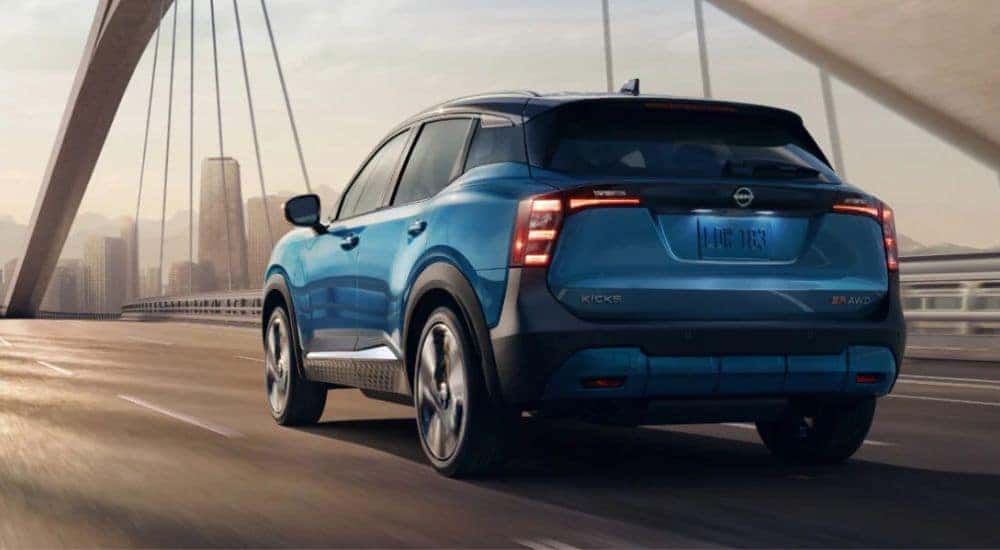
The 2026 Kicks and the 2026 Kona each sit on a wheelbase of just over 104 inches, but how each model uses that space is quite different. The Kicks has a total passenger volume of 95.7 cu.ft. and boasts an entire extra inch of legroom over the Kona.
The Nissan Kicks also brings greater standard interior cargo space. With all seats occupied, the Kicks provides 30 cu.ft. of room for groceries and gear. Comparatively, the Kona has only 25.5 cu.ft. of cargo space.
Small SUVs are great choices for solo drivers because of the “just right” amount of space. But the 2026 Kicks makes sure that drivers who frequently transport passengers don’t need to apologize for the lack of accommodations, making it a more flexible choice for those who travel with family and friends.
Cool Features at a Cool Price
The 2026 Nissan Kicks is offered in S, SV, and SR trims, while the 2026 Hyundai Kona is offered in SE, SEL Sport, SEL Premium, and Limited trims.
Both SUVs offer a choice between front-wheel drive and all-wheel drive. Both are equipped with a standard 12.3-inch infotainment touchscreen and standard wireless Apple CarPlay and Android Auto integration.
But even though the Kona is significantly more expensive than the Kicks, the Kicks still manages to have more to offer.
Convenience
For example, all 2026 Nissan Kicks trims have standard Siri Eyes Free technology. Only the top Kona Limited trim offers dynamic voice recognition. The Kicks also offers standard NissanConnect with a Wi-Fi hotspot, while a Wi-Fi hotspot is only an option on the top trim of the Kona.
The Kicks also offers a myQ connected garage door opener to help you remotely operate your garage door via the vehicle’s touchscreen. Again, this is not an option for Hyundai drivers.
Even the operation of the vehicle is dramatically different. The Kicks offers helpful, time-saving features like remote start and an Easy-Fill Tire Alert that not only senses when your tires are running low, but also when they’ve reached ideal pressure. None of this technology is available on the Kona.
Safety
Also conspicuously absent in the Kona is advanced safety and driver-assistance technology. While the Kicks includes features like Traffic Sign Recognition and Blind Spot Intervention, neither feature is available on the Kona. The Kicks even offers an optional Dual Camera Drive Recorder to save video of your trips. The Kona does not.
Though the 2026 Hyundai Kona offers its own range of innovative technologies, despite its much higher price point, it lacks many of the features that Nissan considers standard.
Which SUV Is the Most Comfortable Overall?
Comfort is, of course, a very subjective topic. It’s highly unlikely that any two people will agree on the same walking shoe, much less the coziness of a driver’s seat.
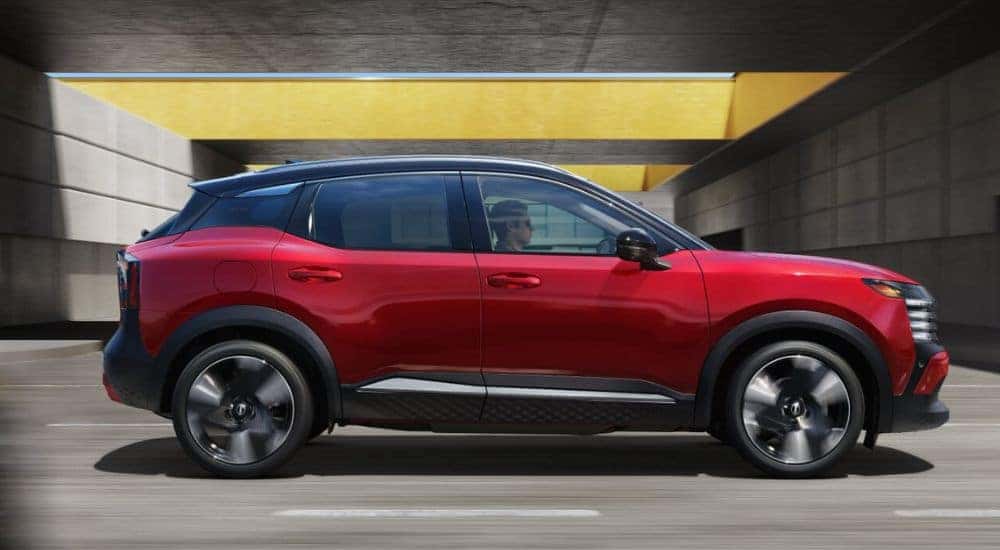
However, Nissan does its best to combat driver fatigue with its NASA-inspired Zero Gravity seats, installed in the front and rear outboard positions of the 2026 Kicks. While the Kona certainly offers some comfortable seats, they can’t quite compare to these.
In the Nissan Kicks, you’ll enjoy cloth or leatherette upholstery. The standard audio system can be upgraded to a Bose Personal Plus 10-speaker system on the SR trim. Features like heated seats and a heated steering wheel can be optioned in as part of Nissan’s multiple optional packages.
For the Kona, H-Tex leatherette is only offered on the SEL Premium and Limited trims, both of which have a higher price point than the top-tier Kicks model. Only the Kona Limited trim gets a Bose sound system, and it only has eight speakers—two fewer than the Kicks. What you see is what you get, too, as Hyundai doesn’t offer many accessory packages.
Which Small SUV Is Right for You?
Choosing your next brand-new vehicle is a decision that requires time and careful consideration. A new car, of any size or shape, is a big investment, and you want to make sure your money goes toward a purchase you can enjoy for many miles to come.
While both the 2026 Nissan Kicks and the 2026 Hyundai Kona offer plenty of great features, the Nissan Kicks simply offers more for the money. It comes in at a lower price point while still having more features, more tech, and more options for drivers looking for a budget-friendly, reliable SUV.
[a]MSRP excluding tax, license, registration, destination charge, and accessories. MSRP may change without notice. See dealer for complete details.

0 comment(s) so far on Why Drivers Are Choosing the 2026 Nissan Kicks Over the 2026 Hyundai Kona